

Gorilla Trekking
You stand still in the forest, a family of mountain gorillas a few metres away, and for an hour nothing else exists.
Find a Gorilla SafariOn this page
Overview
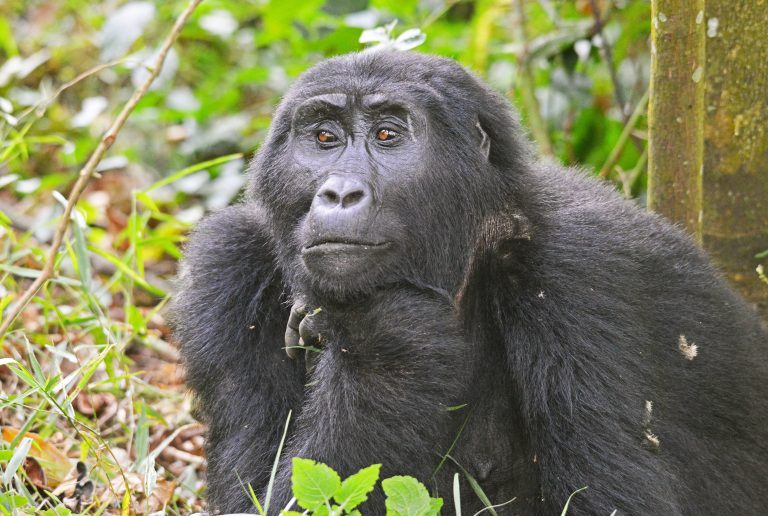
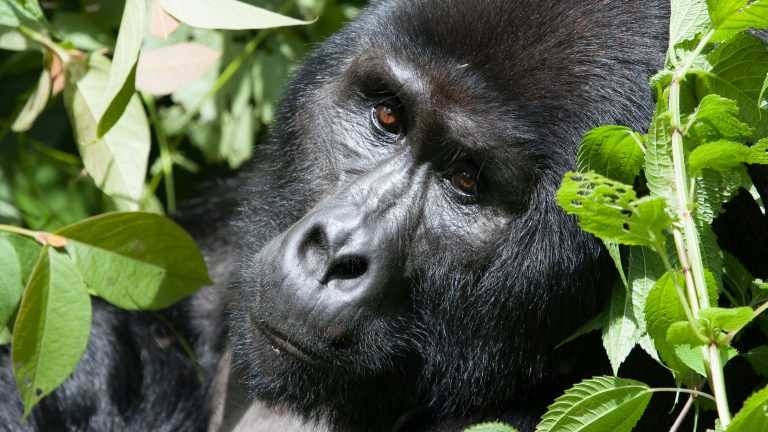
A gorilla trek is a guided walk into protected mountain rainforest to find a gorilla family that is used to people. When you reach them you normally have one hour in their company, watching them eat, doze, play, groom each other and move about the forest.
It is more than one activity on a safari itinerary. You meet one of the most extraordinary endangered animals on earth, and your visit pays directly towards conservation, the protection of the parks and the communities around them.
Mountain gorillas live in one small corner of East and Central Africa, shared by Uganda, Rwanda and DR Congo. They survive because of conservation: protected forest, anti-poaching patrols, veterinary care and carefully managed tourism.
Their numbers were once very low. In recent years the world population has climbed to a little over 1,000, one of the most hopeful stories in conservation.
Gorilla Trekking in Uganda
Uganda has two places to trek: Bwindi Impenetrable National Park and Mgahinga Gorilla National Park, both in the south-west. According to the Uganda Wildlife Authority, more than half of all mountain gorillas live in Uganda, in Bwindi and on the slopes of the Virunga mountains in Mgahinga.
Bwindi Impenetrable National Park is where most visitors to Uganda go. It is a UNESCO World Heritage Site and one of the richest forests in Africa, with more than 120 species of mammal and 350 species of bird.
Mgahinga Gorilla National Park, in the Virunga Mountains, is the quieter choice. It lies close to the borders with Rwanda and DR Congo, and treks set out from the Ntebeko Visitor Centre. UWA says tracking usually takes about 3 to 5 hours, depending on where the gorillas are that day.

Gorilla Trekking in Rwanda
Rwanda's treks take place in Volcanoes National Park, in the north-west of the country. The park belongs to the wider Virunga Conservation Area and is one of the best-known places in Africa to see mountain gorillas.
Rwanda's official tourism site names gorilla tracking among the main experiences in Volcanoes National Park. A permit currently costs US$1,500 per person per day for international visitors, and trekkers must be at least 15 years old.
What Happens During a Gorilla Trek?
You start early, with a briefing from the park rangers. They divide visitors into small groups and give each group a gorilla family to find. How far you walk depends on where that family spent the night, so a trek may be brief or long.
Then you go into the forest with trained guides and trackers. Expect mud, dense undergrowth, steep ground and weather that can turn, so it helps to be reasonably fit.
Everything slows down once the gorillas are found. The group stays calm, quiet and respectful, and watches from a safe distance while the family gets on with its day. The silverback may sit close by, entirely in charge. Youngsters may tumble about in the branches. Or they may all just rest together.
For a great many travellers, that hour is the best of their whole time in Africa.
Best Time to Go Gorilla Trekking
You can trek at any time of year. Most people choose the drier months, generally June to September and December to February, when the forest paths are easier underfoot.
Even so, this is mountain rainforest and it can rain on any day. We strongly advise good walking boots, a light rain jacket, long trousers, gardening gloves and a small daypack.
Gorilla safaris

2 Days Gorilla Trekking In Rwanda

3 Day Bwindi Gorilla Trekking Safari
3-Day Rwanda Gorilla Trekking Safari

4 Days Uganda Primate and Wildlife Safari
5 Days Congo Lowland Gorilla Safari
