
The Great Migration Safari in Kenya and Tanzania
Well over a million animals on the move, predators in their wake: there is nothing else like it on earth.
Find a Migration SafariOn this page
Overview
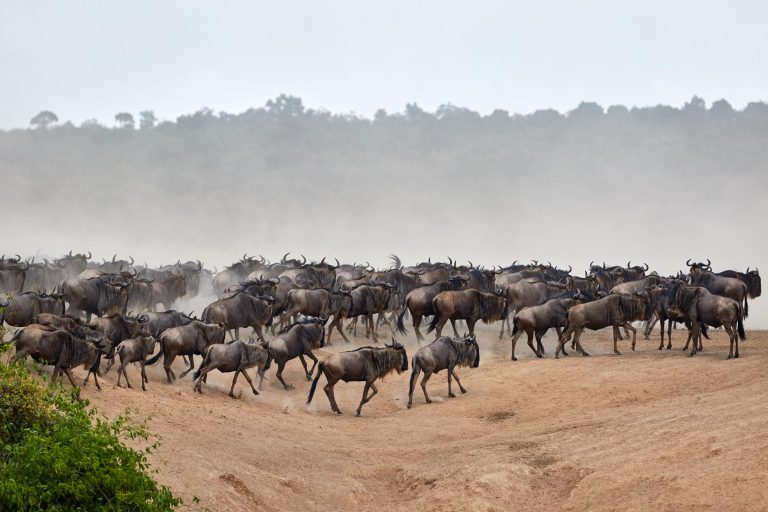
Each year enormous herds of wildebeest, zebra, gazelle and other grazers travel around the Serengeti-Mara ecosystem looking for new grass and water. Their route runs between Serengeti National Park in Tanzania and the Maasai Mara National Reserve in Kenya, and watching it is among the most dramatic safari experiences anywhere. It does not happen on one day. The herds are moving all year, driven by rain, grazing, instinct and the need to survive. Many travellers consider it the greatest sight an African safari can offer.
The Great Migration in Tanzania
On the Tanzanian side the migration is seen mostly in Serengeti National Park, one of the most celebrated safari areas in Africa.
The Serengeti is a UNESCO World Heritage Site, famous for its broad savannah and for the yearly passage of wildebeest, zebra and gazelle with predators close behind. UNESCO calls the migration one of the most impressive natural events in the world. What you see depends on which part of the Serengeti you visit and when.
- The Southern Serengeti and Ndutu area: the place for the calving season, when wildebeest calves are born in their thousands.
- The Central Serengeti: reliable for wildlife in general, and easy to include in most migration routes.
- The Western Corridor: where the herds push towards the Grumeti River.
- The Northern Serengeti: one of the best areas to watch river crossings, above all when the herds are heading for the Mara River.

The Great Migration in Kenya
In Kenya the herds are found in the Maasai Mara National Reserve, one of the best-known safari areas in East Africa.
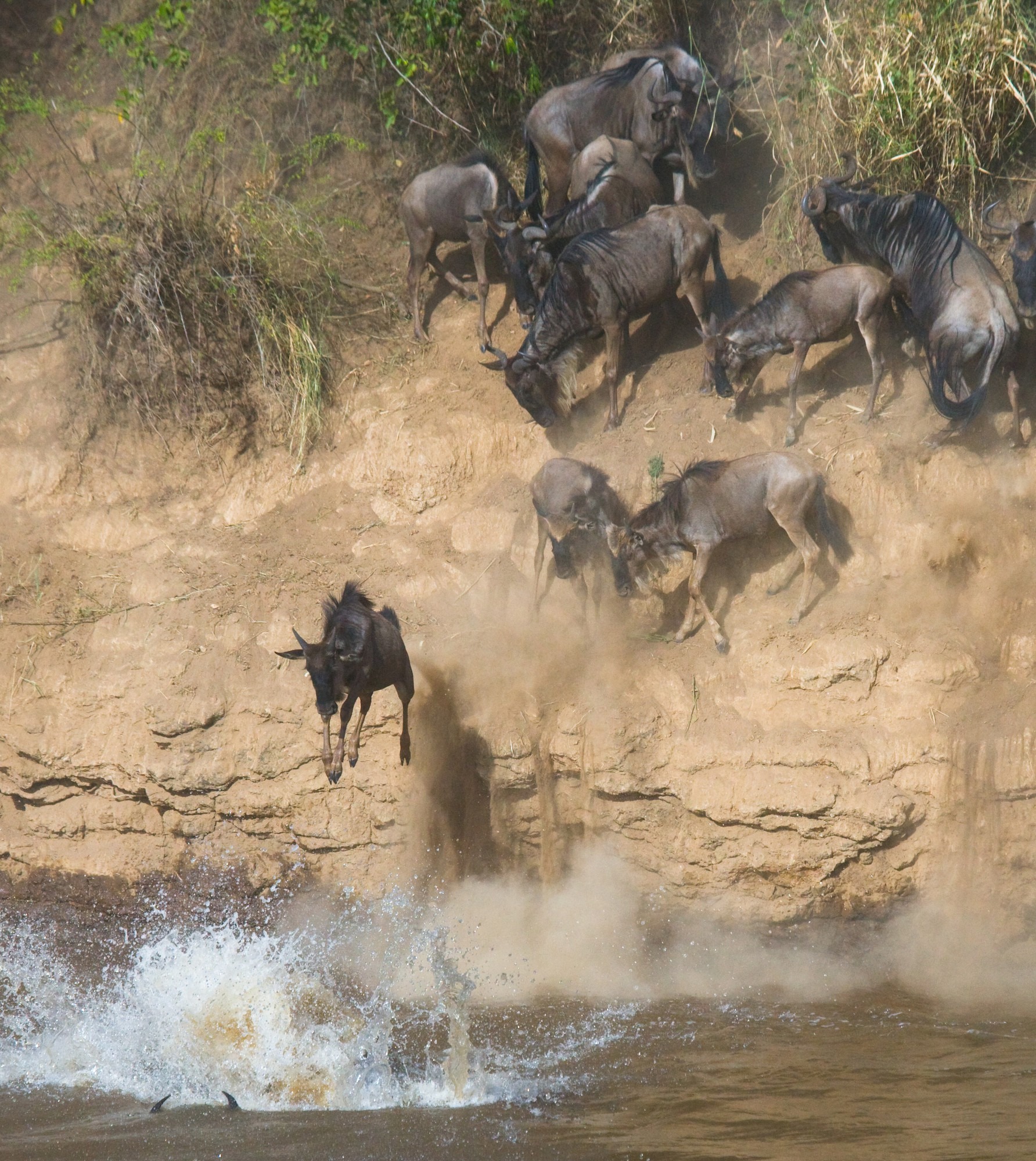
Great numbers of wildebeest and zebra arrive in the Maasai Mara from the Serengeti, usually in the dry-season months. The reserve is best known for the Mara River crossings, where the herds try to cross into Kenya or back towards Tanzania.
No part of the migration is photographed more, and none is harder to predict. Whether a crossing happens depends on rain, where the herds are, the state of the river and the animals' own sense of timing.
Best time to Catch the migration
January to March: the herds are normally in the Southern Serengeti and around Ndutu for the calving season. It is a wonderful time to come, with newborn animals across the plains and predators very busy.
April to June: the herds start to head north and west through the Serengeti, following new grass.
June to July: depending on the rains, they may be around the Western Corridor and the Grumeti River.
July to October: most visitors choose the Northern Serengeti and the Maasai Mara, since these are the months most closely linked with the famous Mara River crossings.
October to December: the herds turn south again towards the Serengeti, and the cycle goes on.
The dates shift every year. The migration follows rain and fresh grass, not the calendar.
Great Migration safaris
4 Days Best of Amboseli Wildlife

7 Days Classic Tanzania Wildlife Safari

7 Days Kenya Wildlife Safari
